


Grooving Tools
Precise Grooving, Maximum Process Reliability
Our new grooving programme has been specially developed for grooving, parting off, groove turning and profile grooving. The modular holder system, paired with a matching range of inserts, streamlines tool management.
By combining innovative indexable inserts and stable holders with integrated internal cooling, our grooving programme offers maximum process reliability, long service life, and outstanding surface finish.
Reduce your per-part costs: With extended tool life and fewer tool changes, you can keep your grooving costs under control.
Why Choose Our Grooving Programme?
Key strengths of our grooving tools:
- Internal cooling in all holders for reduced wear, longer tool life, and high process reliability – even with difficult-to-machine materials such as special alloys
- Controlled chip evacuation thanks to optimised cutting geometry and integrated internal cooling – prevents chip build-up in narrow grooves and minimises machine downtime
- Excellent surface finish without additional refinishing
- High flexibility and cost-effectiveness: standard and special applications in steel, stainless steel, cast iron and special alloys
Our Grooving Tools - Technical Features
Parting Off
Here, a narrow insert penetrates radially into the rotating workpiece until it is completely cut off.
For this purpose, we have developed our STAS indexable inserts with chip breakers specially designed for parting off:
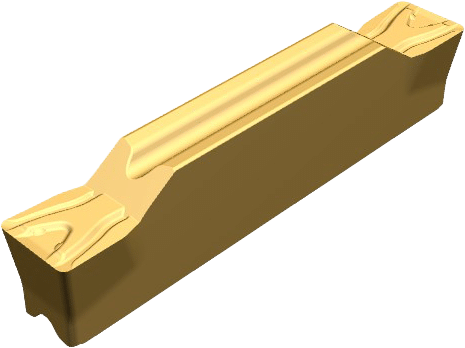
- Corner radius for maximum stability of the cutting edge and best surfaces
- Neutral or slightly positive cutting edge to reduce cutting forces
- Chip breaker specially designed for parting off to produce short, controlled chips
Grooving
Properly matched parameters and choosing the right tool are crucial for process reliability and increased productivity.
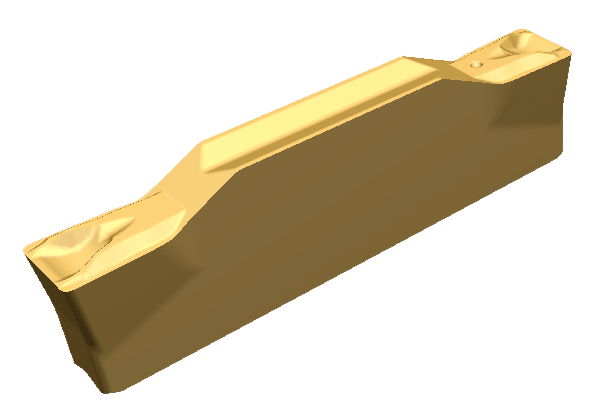
Discover our STES indexable inserts for producing grooves, recesses, or shoulders:
- Corner radius for maximum stability of the cutting edge and best surfaces
- The flanks are designed to minimise friction while providing sufficient guidance.
- Chip breaker specially designed for grooving to break chips into small pieces and guide them out of the groove
Groove Turning
We recommend our STSD inserts for groove turning:
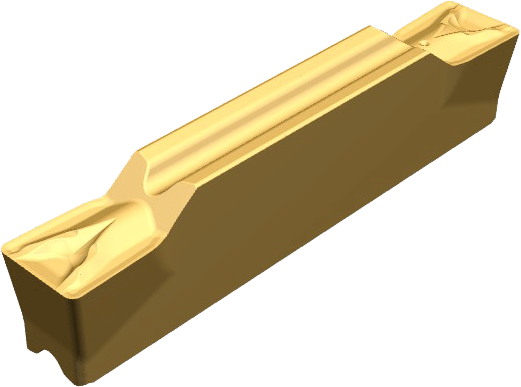
- Corner radius for maximum stability of the cutting edge and best surfaces
- Reinforced flank and stabilised main cutting edge to prevent edge breakage under lateral stress
- Chip breaker specially designed for grooving, for short, controlled chips in narrow grooves
Profile Grooving
Profile grooving is often the best choice, but it can be problematic due to high costs for difficult-to-machine materials and unreliable processes for complex contours.
With our indexable inserts for profile grooving, you can achieve greater cost effectiveness per component, fewer tool changes, and higher machine efficiency.
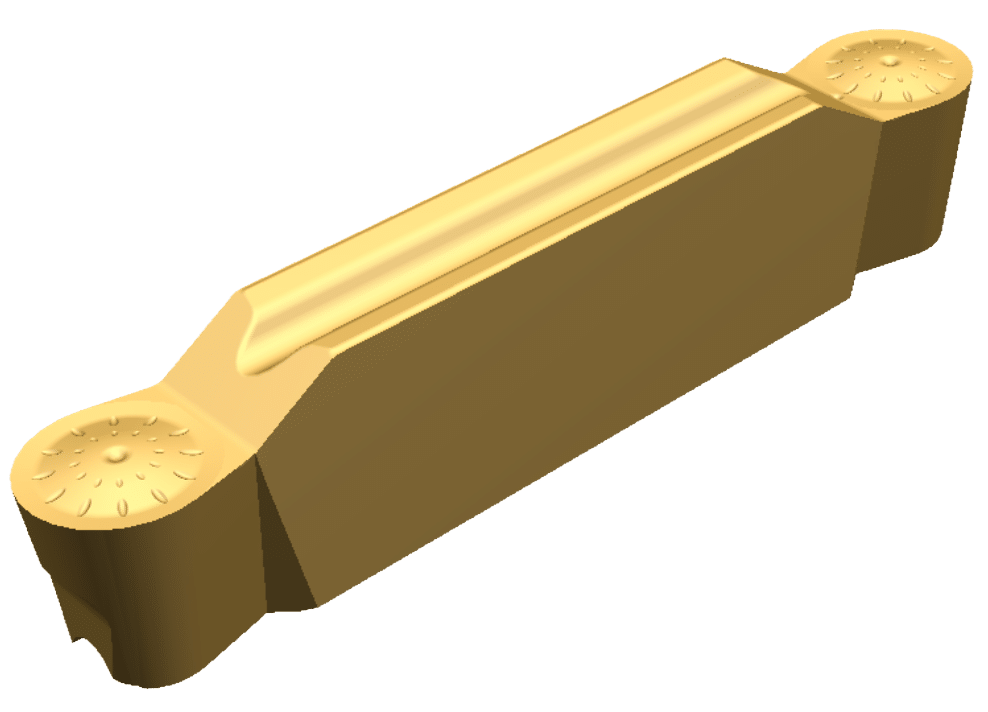
Discover our precision tools for profile grooving:
- Both radial grooving and contoured infeed possible with the same insert, without edge breakage or form errors
- Reinforced flanks and long insert pocket to remain stable with large profile depths and radially and axially alternating forces
- The 3D chip formers are designed to produce short broken chips and remove them from deep grooves.
Grooving Holders
Our grooving holders offer maximum accuracy and stability when machining workpieces. Whether on CNC or conventional lathes, our grooving holders deliver clean cuts, precise edges, and perfect results.
Our grooving holders are made from a robust, wear-resistant material and feature a long service life and reliable performance – even under demanding conditions.
The integrated internal cooling from above and below maximises the insert’s service life. The triple connection option allows the grooving holders to be easily integrated into your existing machine peripherals.
Some of the technical features of our holders:
- Precise insert fit and clamping concept
- Vibration-damping design
- Variety of interfaces and setting options
- Triple connection option for targeted internal coolant

- Rectangular shaft – robust and low-vibration
- Narrow head shape to fit into narrow groove spaces
- Secure insert fit to avoid vibrations
Specially developed grooving holders are available for sliding head turning applications, and, in addition to these properties feature a short, compact head length.
- Rectangular shaft – robust and low-vibration
- Secure insert fit to avoid vibrations
- Short and compact head length
- Integrated and precise internal coolant

Our brochure contains information on carbide grades, identification systems, and much more. Get all the details now.
All About Grooving
Grooving is a machining process in which a specialised tool penetrates vertically into the workpiece to create slots, grooves, or fillets.
- Compact manufacturing steps: Grooving tools can combine several machining operations (e.g. grooving and longitudinal turning) with just a few tools.
- High precision: The special tool geometry allows for clean cuts and precise grooves even in narrow areas.
- Efficient process design: Cost benefits per component thanks to extended tool life, fewer tool changes, and lower set-up costs.
Grooving tools are used in a wide range of industries, ranging from traditional metalworking to automotive and aerospace. The choice of tool depends heavily on the material of the workpiece (e.g. steel, cast iron or high-temperature alloys).
- Automotive industry for manufacturing precision grooves for piston rings
- Aerospace for maintaining tight tolerances on critical components
- Mechanical engineering for manufacturing grooves in shafts and axles
- Medtech for manufacturing precision slits in surgical instruments
- Separating components: During parting off, a workpiece is cut from the bar material, or a finished part is separated from the remaining stock. This is an essential machining step on lathes.
- Production of grooves and contours: Parting and grooving tools allow precise cutting of form grooves, transitions or narrow profiles that would be more difficult or inefficient to machine with other tools.
- Machining between shoulders or limited space: The compact design of the tool means that groove turning can also be used where space for other tools is limited.
When grooving and parting off, a high-pressure cooling and lubrication strategy is particularly important: it significantly improves heat dissipation and facilitates chip removal, thereby increasing the tool’s service life considerably.
